

Adam Smith wrote “Wealth of Nations” in 1776. It spawned a mighty business and cultural upheaval.
You’ve heard of it. The Industrial Revolution.
THE INDUSTRIAL REVOLUTION
Millions abandoned their villages and flocked to the city’s factories.
It’s easy to recall images of factory production lines swarming with workers.
Imagine the bustling scenes in the cotton mills of England or the Model-T Ford plant in the USA.
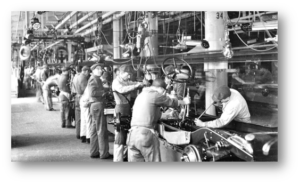
The business, social and cultural fabric of the world was changed forever.
For almost a century this was the norm. This was what “Business as Usual” looked like.
THE AUTOMATION REVOLUTION
Then, in the late 20th century, the Automation Revolution kicked off.
Industrial robotics became widespread.
Machines replaced routine manual labour as orange robots took over factories everywhere.
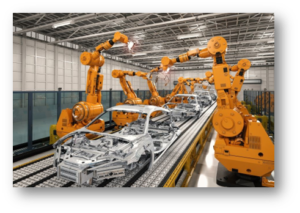
Millions abandoned the factories, reskilled and deployed elsewhere.
The business, social and cultural fabric changed forever.
This was what “BAU” looks like now.
THE AI REVOLUTION
On November 30th, 2022, OpenAI launched ChatGPT.
It wasn’t flashy. It didn’t announce itself with fanfare. Just a quiet little capability. One of many now available.
Three months later, a senior leader in a government agency started receiving funding requests for projects built with generative AI.
Four months later, a university administrator was summoned to a board meeting. How to prevent students from submitting AI-written assignments.
Six months later, a small team at a consultancy found themselves under threat. Their long-standing data analysis offering could now be replicated or bettered. By a $17 a month subscription.
And on it goes.
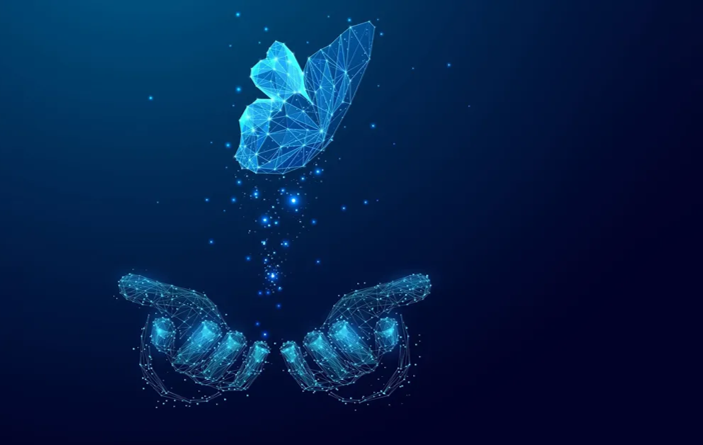
No-one really knows what the full butterfly effect of the AI revolution will be.
We do know that BAU will come to look very different.
We do know that the business, social and cultural fabric will change forever.
We do know that the approaches, skills and practices that got us to here…
… will be far less useful for where we’re going next.
SOME THOUGHTS AND OBSERVATIONS
AI is not a new feature to deploy
Too many leaders are waiting for their vendors to “add AI” into their software stack as if it’s a handy new feature or plug-in.
But this moment is not about patching existing tools. It’s about rewiring how decisions get made, who makes them, and how organisations learn.
AI isn’t a feature. It’s a capability. And capabilities must be built.
“If you’re treating AI like an upgrade, you’re already behind.”
It’s the Knowledge Workers Turn
Just as automation reshaped factories, AI is reshaping desks.
It’s no longer just manufacturing work being disrupted. It’s cognitive work, clerical work, creative work. Work that once felt immune.
This shift is existential for many. It triggers uncertainty, resistance, even fear.
But with the right cultural foundations, it can unlock extraordinary new value.
“Automation replaced routine manual work. AI replaces routine mental work.”
This is not BAU – It’s a new board-game entirely
Change fatigue is real. But denial is dangerous.
What’s coming isn’t a slight adjustment to the current way of working. It’s the need to build an entirely new operating model.
That means new workforce structures, new skill stacks, new leadership practices.
It’s not about moving the pieces. It’s about understanding that there’s a whole different board.
“The real risk isn’t doing too much — it’s doing too little, too late.”
SUMMARY & CLOSING THOUGHTS
The age of AI is not a chapter in the same book. It’s a new book entirely.
This isn’t about upgrading a system or shuffling an org chart. It’s about reimagining how your business creates value, how your people work and adapt, and how ready your culture is for what’s next.
Now is the time to pull the levers of culture. To shift toward a mindset of experimentation and innovation, balanced with the right governance, risk, and strategy.
This isn’t about chaos. It’s about creating readiness inside a deliberate, well-considered framework.
Because true transformation doesn’t bolt onto existing plans — it challenges them.
“It is not the strongest of the species that survives, nor the most intelligent. It is the one most adaptable to change.”
Charles Darwin
IS YOUR CULTURE READY FOR THE AI AGE?
If you can feel the shift — but aren’t sure where to begin — we’d love to help.
At FPC, we’ve developed a practical diagnostic to help leadership teams assess their cultural readiness.
Then a systematic approach to align mindset, structure, and behaviour with the demands of a fast-approaching future.
The first step isn’t about new technology.
It’s building a culture that’s ready to embrace it.
