

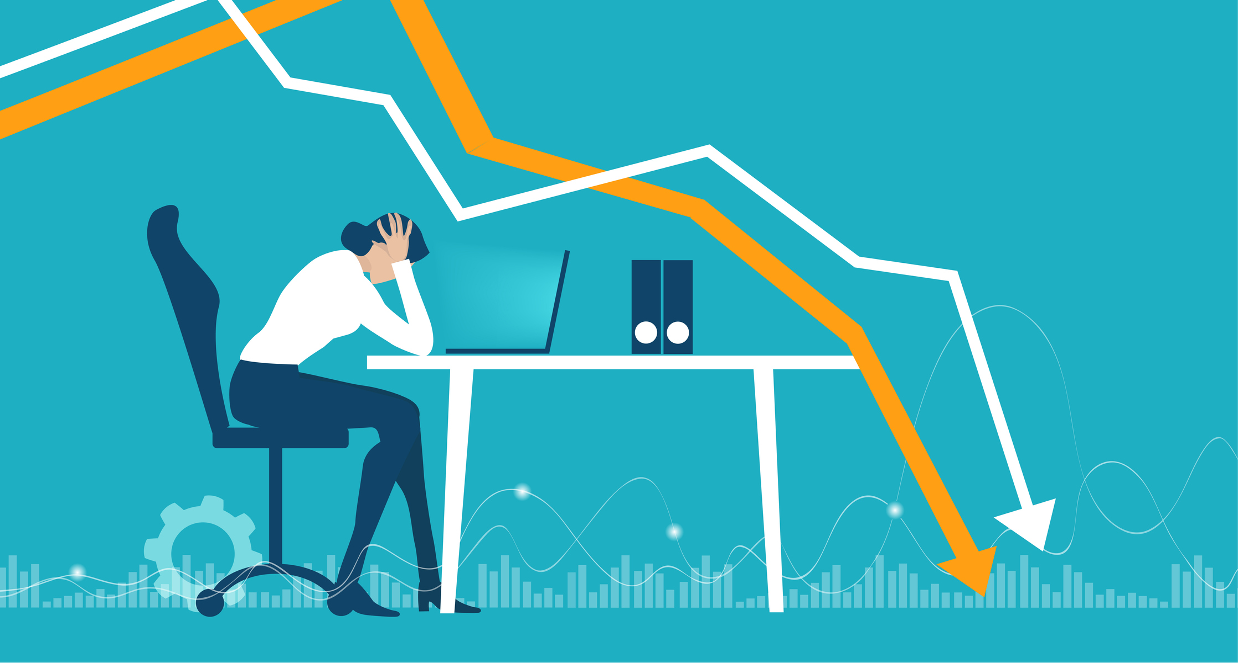
The physical constraints of the human body are obvious.
We can’t run faster than a dog.
We can’t breathe water.
We can’t fly.
We’re all broadly the same shape. Head, torso, arms, legs.
So, we design our physical world accordingly. It would be ridiculous not to.

A car steering wheel looks the way it does because we have hands, and we need to turn it.
It’s perfectly designed for the length of our arms and how our hands work.

If you got into your car one day and it looked like this. You’d be totally flummoxed.
It’s clearly not designed for how the human body works.
You’d struggle. Probably crash.
You see we instinctively design our world to fit the evolved human body.
But we rarely design our world for the evolved human mind.
Modern Workplace Design
Now hop out of the drivers’ seat and look around the modern workplace.
Let’s ditch the perfect lighting and have candles, have milk crates for seats, and make sure that every desk wobbles.
That’d be crazy! Everyone would freak out!
Yet psychologically that’s exactly what many workplaces feel like.
Almost perfectly set up for psychological torture!
Picture This
We obsess over the ergonomics of work.
Chairs that hug our spines. Desks that glide up and down. Big, beautiful monitors set perfectly at eye level. We calibrate light, air, heating, even the snack selection.
Then we open our laptops and step into a world that ignores how human minds actually work.
Email pings slice through focus. Open plan rooms amplify every conversation. Hot desks erase any sense of place.
We optimise for the body, then overwhelm the brain.
The Problem beneath the Problems
Most organisations design tools and processes for the left brain. Logical. Linear. Efficient.
Great for theoretical perfect-processes, rules and routines. Less great for real humans doing complex work in noisy, interrupt-riddled environments.
The right brain gets sidelined. That is the seat of intuition, creativity, pattern spotting and social sense-making. When it is starved, performance drops and people feel stressed, anxious.
We know happy, focused teams outperform. Yet we keep building environments that fracture attention and fray relationships. Then we wonder why productivity lags and burnout rises.
How this shows up in real life
- Constant context switching. The curse of email and instant messaging. Messages, meetings, pings and “quick questions” shatter deep work.
- Open plan fatigue. Working like battery hens in soulless cubicles. Noise and visibility boost vigilance, not collaboration.
- Hot-desk homelessness. Looks great on a spreadsheet but no anchor point means no sense of place or personalization. Belonging suffers.
- KPI’s replace vision & purpose. The interminable treadmill of short-term goals. We feel like a mouse on a wheel. Directionless and going nowhere.
None of this makes people weak. We’re just not wired to live this way.
Working hard at something you love is called passion.
Working hard at something you hate is called stress
Simon Sinek
So, what do we do?
If we want people to bring their full selves to work, we need to stop designing the workplace for just half of their brains.
We do it for our physical needs. But when it comes to the mind, we still pretend that productivity is just a matter of logic and willpower.
Here’s a better path:
- Make space for focus: Shallow work is everywhere. Deep work needs defending. Reclaiming a few hours a day of uninterrupted thought is a superpower. It’s what lets humans solve hard problems, not just attend meetings about them.
- Anchor people to place and purpose: We all need a sense of “this is mine.” A desk. A rhythm. A ritual. When every space is temporary and every week is different, it erodes stability. And when KPIs crowd out purpose, motivation drains away.
- Design with the whole brain in mind: Left brain. Right brain. Rider and elephant. Humans are not robots with emotions. We’re emotions with a bit of logic sprinkled on top. If we want sustainable performance, we need to embrace the constraints of the human mind.
Because in the end, burnout isn’t just a health issue. It’s a design flaw.
The Pay-Off
Designing for the whole human is not a wellness perk. It is good business. Fewer errors. Faster throughput. Better ideas. Stronger teams. When the physical setup and the mental ecosystem support each other, you get full brain on the task.
FPC Can Help
If you want to reduce noise, protect focus and tune your ways of working to how minds actually perform, our Culture Mechanics can run a fast diagnostic and co-design practical shifts with your leaders and teams. Small changes. Big lift.
Let’s make your workplace fit your people, not the other way around.
